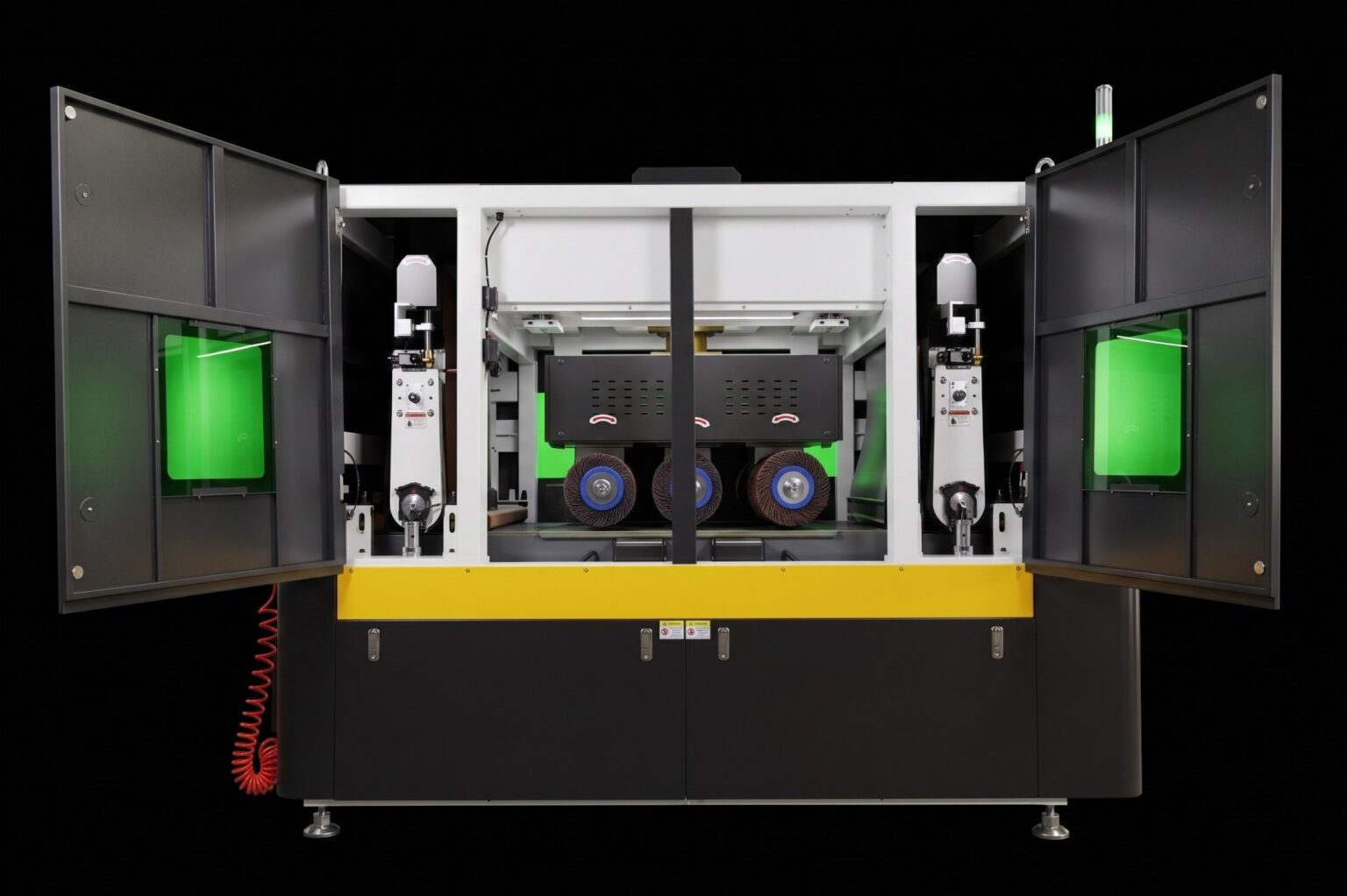
Commencing an extensive examination involving intelligent equipment engineered for edge smoothing provide transformed engineering procedures, delivering marked benefits towards velocity and quality. This analysis examines the varied types of tools, including buffing blasting equipment, oscillating units, and sophisticated programmed applications. We will explain the pros of integrating these solutions, featuring minimized employee overhead, enhanced output accuracy, and amplified manufacturing efficiency.
Rim Rounding Apparatuses: Consistent Processing Illustrated
Contour deburring apparatuses offer a cutting-edge solution for producing specific finalizing on parts. Differing from manual ways, these robotic apparatuses furnish dependable results and greatly boost construction efficiency. Such systems frequently adopt mixed abrasive devices like circular blades, refining wheels, or unique contours to get rid of sharp borders and defects. This operation is important in a large array of domains, featuring vehicle and instrumentation.- Improve surface finish
- Minimize production overhead
- Maximize capacity and effectiveness
Residue Elimination Machines: Gaining Unblemished, Outstanding Facades
Present-day metal fabrication techniques regularly generate significant amounts of slag, a byproduct that, if present, can severely affect the quality of the production. Fortunately, advanced slag removal machines offer a proven solution. These exclusive machines, employing techniques like abrasion, are designed to carefully eliminate this unwanted material, ensuring a clean and outstanding surface. The resulting positive effects include decreased rejection rates, improved aesthetic appeal, and an overall escalation in operational performance. By utilizing state-of-the-art slag removal technology, manufacturers can consistently deliver premium surfaces and achieve stringent norms.
Thin Sheet Refinishing: The Benefits of Deburring Devices
Achieving a leading coating on sheet metal parts is necessary for operation, and deburring units furnish major profits over physical methods. Eliminating burrs speedily not only increases the cosmetic quality of the piece, but also stops anticipated malfunctions during fabrication and employment. Furthermore, digital deburring methods advance fabrication speeds and curtail operator outlays.
Elevating Sheet Metal Production with Automatic Deburring
With the aim to boost performance in sheet metal creation, evaluate intelligent deburring processes. Old-fashioned deburring is frequently drawing-out and prone to irregularities. Moving to robotic deburring grants weighty gains, containing reduced employment costs, upgraded finished goods, and raised industrial efficiency. This outlays are capable of rapidly deliver value.Identifying the Fitting Deburring Device for Your Task
Choosing the top deburring system for your individual needs entails a precise assessment of several factors. To begin with, review the classification of resource you're operating on – the metal requires unique techniques than polymer. Thereafter, weigh the measurements and geometry of the components needing surface cleaning. At last, consider your output level; a bulk operation asks for a custom type of mechanism than a low-volume one. Failing to account for these points can lead to poor results and additional investment.
Deburring Machine Technology: Trends and Innovations
Recent burring machine technology is experiencing rapid expansion, powered by the requirements for greater fineness and competence in workflows tasks. Important directions include the merging of digital apparatuses for modifiable edge finishing functions, alongside progress in lapping application. We're besides noticing a growth in portable finishing apparatuses intended for specific purposes, and groundbreaking strategies like plasma polishing are collecting popularity. The future reveals towards amplified integration of finishing apparatuses within the connected operation surroundings.
Enhancing Engineered Unit Quality with Perimeter Shaping
Many forming processes for copper parts introduce sharp edges, which can cause stress regions and flaws that jeopardize overall strength. Outline rounding, a simple yet influential method, offers a straightforward solution. It demands slightly smoothing the jagged edges of a piece during the construction stage. This lowers stress accumulations, increases longevity lifespan, and can control fracturing. Benefits are further amplified when dealing with advanced geometries or parts subjected to considerable pressure. Considerations include the best radius of the bevel and its outcome on mating with other modules.
- Reduces Stress Spots
- Raises Operational Durability
- Prevents Breaking
Residuum Elimination vs. Deburring : Distinguishing the Differences
Even though many craftsmen use the terms “slag extraction” and “deburring” equivalently, they represent distinct procedures in metal assembly routines. Bur remission focuses on cutting away the sharp, often tiny, burrs created during shaping operations—these are excess scraps of fabricate left on the section. Dross processing, conversely, addresses that offshoot – typically a mixture of impurities – that occurs during processes like smelting. Sheet Metal Deslagging Essentially, deburring deals with unwanted perimeters, while slag removal deals with a residue of a distinct method. Ultimately, intelligent deburring and scale removal machines are crucial components of modern metal processing that provide first-class finished products with lessened defects and augmented efficiency.Closing the study points out the essential role of progressive automated deburring technologies in upgrading engineering guidelines and driving businesses gain boosted productivity and caliber.